
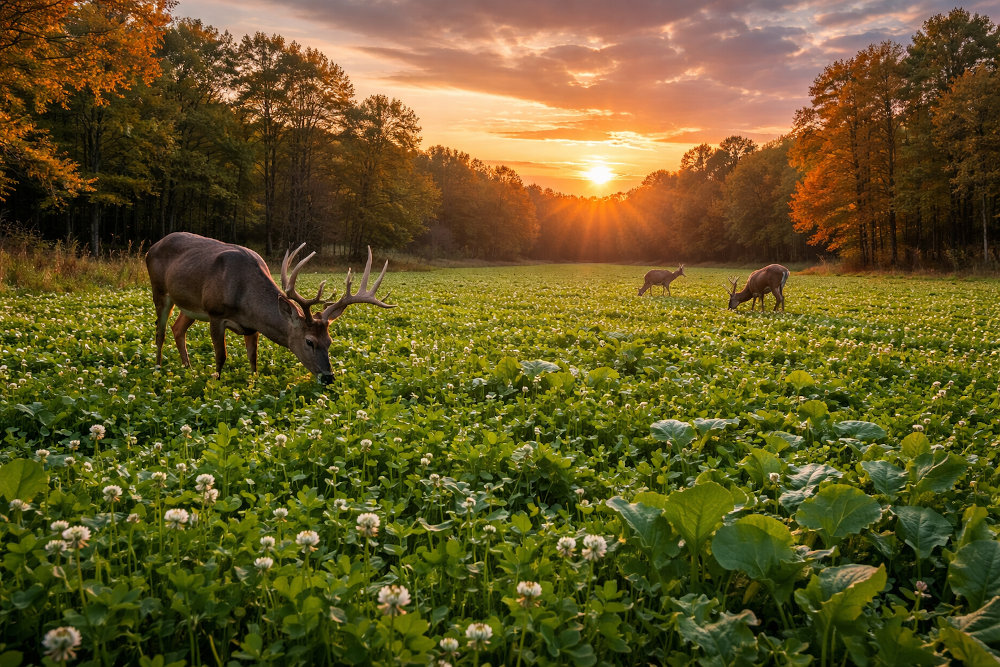
Building Healthier Soil for Stronger, Healthier Deer
Whitetail deer are selective feeders. They instinctively seek out the most nutrient-dense forage available.
By improving soil biology and nutrient retention, Ecochar can increase the nutritional value of deer food plots in a natural, soil-first way — helping attract deer while improving long-term plot performance.
What Is Ecochar?
Ecochar is a high-carbon soil amendment created through a controlled thermal process (often called pyrolysis).
Unlike ash or raw charcoal, properly produced Ecochar is:
- Highly porous (lots of internal surface area)
- Stable in soil for many years
- Helpful for nutrient and moisture management
- A habitat for beneficial soil microbes
Why Soil Quality Matters for Deer
The nutritional value of forage depends directly on soil health. Poor soils can produce green growth that still lacks key minerals and protein.
Deer often return to the areas that provide the best nutrition — because their bodies can “tell” the difference.
Improving soil biology is often more effective long-term than simply applying more fertilizer.
How Ecochar Helps Deer Food Plots
1) Better Nutrient Retention
Ecochar can help hold nutrients in the root zone, reducing nutrient loss from leaching — especially during late fall rains, winter snowmelt, and early spring runoff.
When spreading Ecochar in the fall or winter, the forage that grows in spring and summer can be more nutrient-dense.
Improved forage quality may help make food plots more attractive to deer and other wildlife, although wildlife response will vary based on local habitat conditions, population density, hunting pressure, and available food sources.
2) Stronger Soil Biology
Healthy soils are living systems. Ecochar’s porous structure provides micro-habitat for beneficial soil organisms.
Over time, this can support improved nutrient cycling and root development — helping plots stay productive.
3) Improved Water Management
Ecochar may help soils handle moisture swings — supporting moisture retention during dry periods and improving structure in heavier soils.
The goal is more consistent forage growth across changing weather conditions.
Why Fall or Winter Application Works Well
Applying Ecochar in fall or winter allows time for natural soil processes to begin incorporating the amendment before spring:
- Freeze-thaw cycles can help work it into the surface layer
- Soil microbes begin colonizing the char’s pore structure
- Nutrients can bind within the soil profile before planting season
By spring, the soil ecosystem may be better positioned to support healthy forage establishment and growth, depending on soil conditions, weather patterns, and management practices.
Observed Wildlife Response
Many land managers report increased deer traffic and longer feeding time in plots where soil health has been improved.
Many wildlife managers observe that deer often spend more time in areas that provide abundant, high-quality forage and suitable habitat conditions.
Long-Term Plot Benefits
Traditional fertilizers are typically applied yearly. Ecochar, on the other hand, is a long-lived soil amendment that can:
- Support long-term soil structure improvement
- Help build soil carbon over time
- Reduce nutrient loss and improve efficiency of inputs
- Support resilient, repeatable forage performance season after season
Great Pairings: Deer Plot Crops
Ecochar is commonly used alongside forage plantings such as:
- White and red clover
- Alfalfa
- Chicory
- Winter rye and other cereal grains
- Brassica blends
- Native forage mixes
Practical Tips
- Apply before planting, or in fall/winter ahead of spring seeding
- If possible, lightly incorporate into the top few inches
- For activation, pair with compost or organic fertility sources
- Start with a test area and compare results
A Smarter Path to Wildlife Nutrition
Rather than relying on short-term attractants, Ecochar improves the foundation: the soil.
Healthy soil grows healthier forage.
Healthier forage supports healthier deer.
Deer food plots don’t just benefit whitetails — they often become a high-value feeding and bedding hub for a wide range of wildlife. Turkeys commonly forage for tender greens, seeds, and insects along the plot edges, while rabbits and squirrels browse young growth and fallen seed. Songbirds and quail may use the area for seed and cover, and pollinators like bees and butterflies are drawn in when clover and other flowering forages are present. Even small predators such as foxes and hawks may frequent the area as the plot supports a healthier, more active food chain. In short, a well-managed food plot can function like a “wildlife buffet” and a habitat boost — supporting biodiversity while improving the land overall.
It’s a sustainable strategy for landowners, hunters, conservationists, and habitat managers who want better plots and better herds over the long haul.