
Ecochar + Nutritional Forages: Building Healthier Feed & Grazing for Cattle, Dairy, Horses, Sheep & Goats
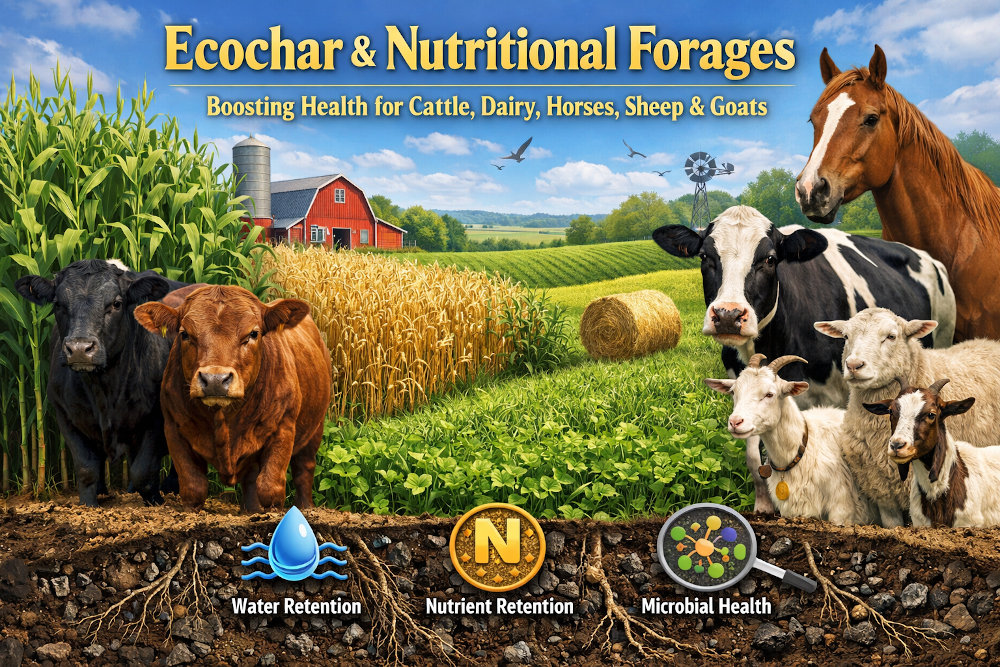
Forage is the foundation of livestock nutrition. When your corn silage, hay, oats, pasture grasses, and legumes grow in healthier, more biologically active soil, the animals that consume those forages benefit too. Ecochar (an agricultural-grade biochar) is a soil amendment that helps improve soil structure, nutrient efficiency, and water management—creating stronger forage stands and more resilient feed systems across the farm.
Ecochar is a stable, carbon-rich material made from natural biomass. It contains a network of tiny pores that can hold water and nutrients while providing “real estate” for beneficial soil microbes. In practical terms, Ecochar helps the soil function better—especially in fields where compaction, drought stress, nutrient leaching, or low organic matter limit forage potential.
Nutritional forage production depends on consistent growth, strong root development, and efficient nutrient uptake. Ecochar supports these goals by improving the soil environment where roots and microbes do the real work.
Corn is a heavy feeder that responds well to consistent moisture and a steady nutrient supply. Ecochar can help maintain nutrient availability in the root zone and buffer moisture swings. The goal is a healthier plant from the ground up—more uniform stands, stronger roots, and better field resiliency.
Hay fields depend on regrowth and root energy reserves. Ecochar can support water retention and biological activity that improves stand persistence and recovery after cutting. This can be especially useful in fields that dry out quickly or struggle with thin stands over time.
Oats and small grains can benefit from improved soil tilth and nutrient efficiency, especially when used for early-season forage, nurse crops, or cover cropping. Ecochar can help stabilize nutrients and support soil biology that improves root performance.
Pasture health is soil health. Ecochar can help improve water infiltration, reduce runoff, and support a more active microbial community. For rotational systems, a stronger root zone and better moisture management can help maintain forage availability and recovery.
Ecochar doesn’t “feed the animal” directly when used in the soil—it improves the forage system that feeds the animal. Better-growing plants often mean more consistent intake, fewer stress-related drops in forage quality, and improved overall herd or flock performance.
For feeder cattle, the focus is steady gains and efficient conversion. Strong pasture and forage performance helps maintain consistent energy and fiber intake, supporting growth while reducing stress on the system during weather swings.
Dairy production relies on predictable, high-quality forage. Improvements in forage consistency and field resiliency can support ration stability and reduce the peaks and valleys that can occur when forage supply is stressed.
Horses thrive on clean, consistent forage and healthy pasture management. Ecochar-supported soil can improve pasture vigor and help maintain grasses through dry periods, supporting better grazing and hay production for equine operations.
Small ruminants benefit from diverse, resilient forage systems. Strong pastures and well-managed mixed stands help support steady intake and reduce pressure during seasonal shifts.
Whether you’re growing corn silage, producing premium hay, or managing rotational pastures, Ecochar can be part of a practical strategy to strengthen soil function and improve forage performance. Healthier soil supports healthier plants—and healthier plants support healthier livestock. For operations focused on resilience, nutrient efficiency, and long-term productivity, Ecochar is a smart addition to the forage toolbox.
What Is Ecochar?
Why Ecochar Works So Well with Forage Crops
Ecochar + Common Nutritional Forages
Corn (Silage & Grain)
Hay (Grass & Mixed Hay)
Oats & Small Grains
Pasture (Grasses & Legumes)
How Better Forage Supports Animal Health
Benefits by Animal Type
Feeder Cattle
Dairy Cows
Horses
Sheep & Goats
Best Practices for Using Ecochar on Forage Ground
A Practical, Soil-First Upgrade to Farm Nutrition